

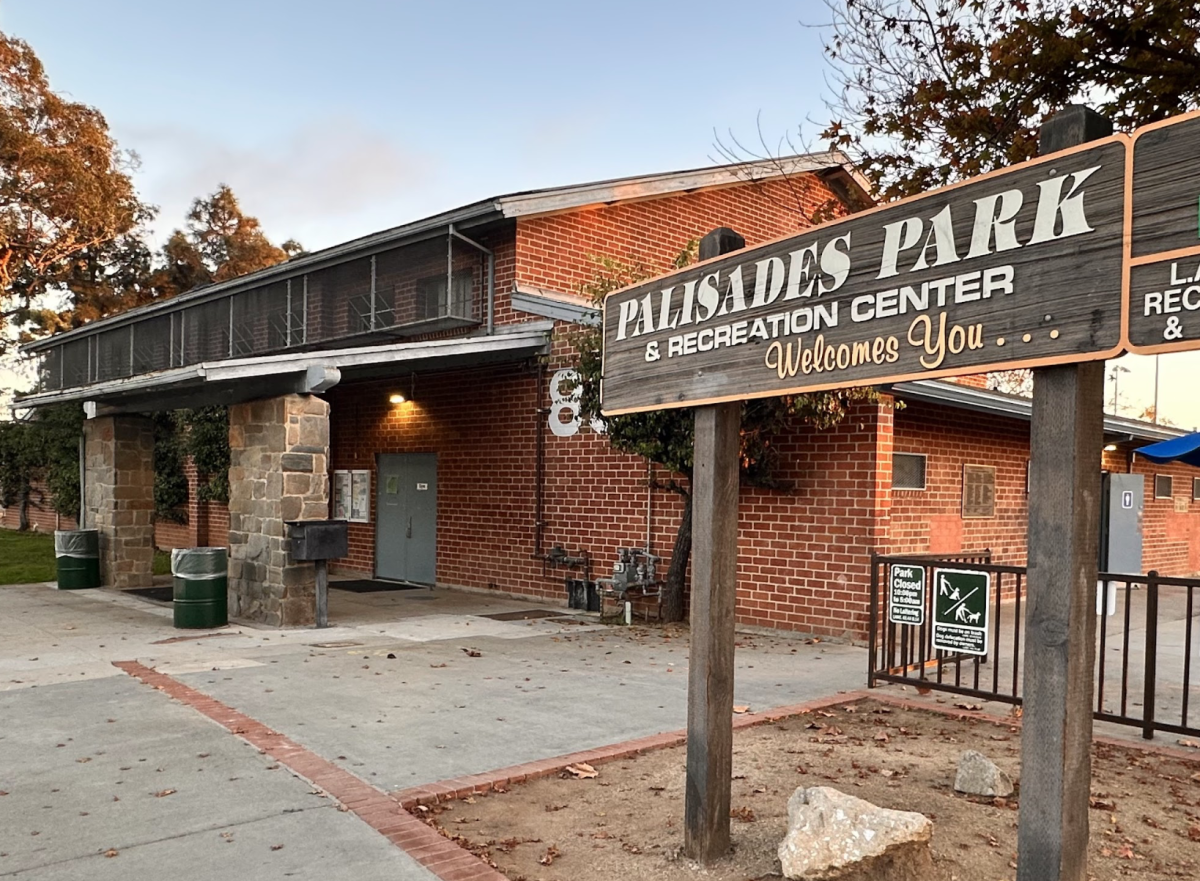
With a bigger gymnasium, indoor pickleball courts, resurfaced tennis courts and a reported $25-30 million budget, the plan to rebuild the Palisades Recreational Center (Rec Center) is ambitious. And while the opportunity for a modern facility is exciting, it has also sparked a debate over whether preserving the past should come at the expense of serving today’s community.
The City of Los Angeles (LA), along with developer Rick Caruso, Steadfast LA and LA Strong Sports, announced in their private-public partnership that the 11-acre renovation includes demolishing outdated facilities like the 78-year-old Small Gym. While some are upset that the Rec Center is losing what they have termed a historic landmark, age alone doesn’t make something worth preserving.
The Rec Center previously had two separate gyms known as the Small Gym and the larger New Gym. The New Gym burned on Jan. 9 during the Palisades Fire, leaving the Small Gym as the only remaining building, which is functionally obsolete.
According to Circling the News, the gym only has one basketball court with little room on the sidelines. The non-handicap-accommodating bathrooms and ineffective plumbing system pose other problems, as does the building’s lack of heat, air conditioning and Wi-Fi.
Despite the limited amount of space and resources the Small Gym offers, some remain opposed to replacing it with a modern facility.
Among them is local historian and curator for the Pacific Palisades Historical Society (PPHS) Randy Young, who spoke on the historic importance of the gym at a community meeting, where project representatives shared the park’s plans.
“I’m here to speak for this structure,” Young said. “Steve Kerr learned to play basketball here. This place is historic; this place served the community.”
While Young’s point reflects the gym’s past significance, it doesn’t explain why today’s users should be confined to outdated facilities because a professional once trained there.
Soil and indoor air testing conducted by the City of Los Angeles in June and September raises an even bigger concern on the building’s usability.
June reports showed that contaminants were detected at the Rec Center that would require remediation before the building could be safely used long-term. Initial indoor air testing detected tetrachloroethene (PCE) above recommended screening levels, and soil testing identified elevated metal concentrations. The US Environmental Protection Agency notes that short-term exposure to PCE can cause dizziness and headaches, while studies on prolonged exposure in animals have linked it to liver and kidney damage.
Although the September follow-up testing didn’t detect the same hazardous PCE levels, the report makes clear that continued use of the Small Gym would warrant addressing these environmental risks before reopening.
Keeping the gym is a costly undertaking, underscoring a more proactive use of the space to create a modern athletic facility.
Not only would the new facility meet the safety expectations for users, but it would also house an additional full-size basketball court, a multipurpose room, offices for staff and larger restrooms. On top of that, with one larger facility, there will also be room for pickleball courts in the park. This addition will encourage use of the Rec Center, along with fostering new experiences in the community.
Sophomore and Junior Varsity (JV) doubles tennis player Bennett Murphy agreed: “[The Rec Center] already has such a strong community and being able to practice pickleball there [in addition to] tennis would be super cool. It’s not the same where I’ve been playing after the wildfires.”
Murphy’s comments reflect a broader message: the Rec Center’s identity has always come from the people who use it, not the structures themselves.
For sophomore and JV basketball point guard Westin Hama, the Rec Center is a hub for the Palisades because of “the community, not the courts.”
Even if the Small Gym is replaced, the Rec Center will continue to be a focal point it’s surroundings.
President of the Palisades Park Advisory Board Andy Starrels shared a similar sentiment with the public at the same community meeting Young spoke at.
Starrels prefaced his statements, explaining that the PPHS had sent a letter requesting the preservation of the Small Gym, a remark that drew applause from the audience.
“The proposed historic designation offers little actual evidence of architectural significance,” Starrels said. “It’s more of a land use argument that the building should be adaptively re-used and converted for non-recreational uses.”
The Rec Center was made to serve the community, and keeping the facilities the same as they were almost eight decades ago no longer serves that purpose.
Providing modern facilities to the Palisades should be a driving factor in the rebuilding plan. While supporters of preserving the existing architecture focus on protecting memories, doing so risks sidelining the needs of the current community.
The Small Gym served the Palisades for decades. Letting it go will serve the Palisades for decades to come.